The Apex of Commercial Coffee
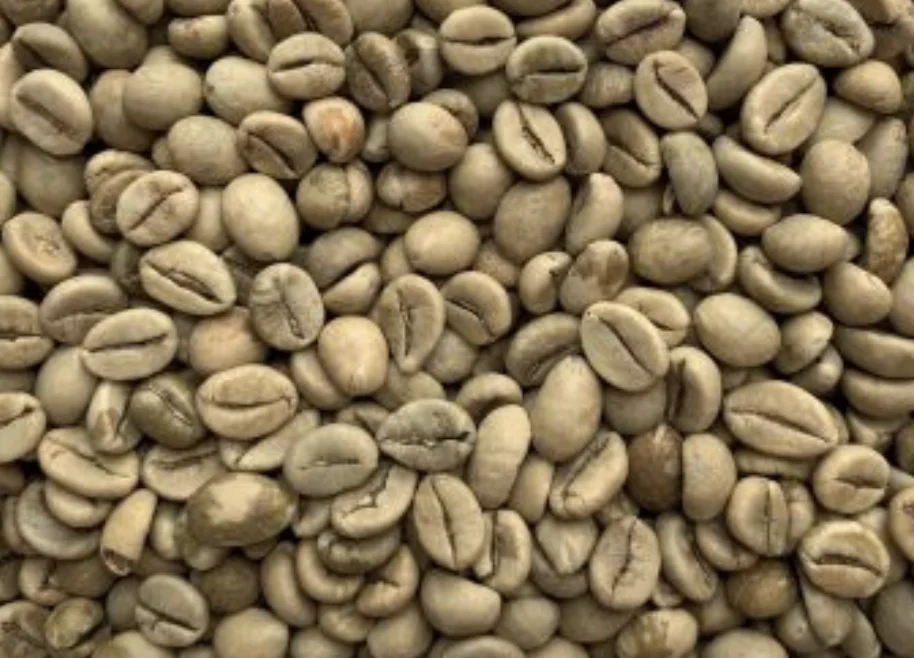
When international buyers search for the highest commercial quality ofVietnamese Robusta, they are looking for Grade 1 Screen 18 (G1 S18). This specification represents the absolute pinnacle of size and purity available in the massive export volumes originating from thebasalt soilof the Central Highlands.
Understanding the Screen 18 Standard
In the global green coffee trade, "Screen 18" means the beans are mechanically sorted through a sieve with holes measuring 18/64ths of an inch (approximately 7.1mm). To qualify for this premium grade, at least 90% of the lot must be retained on the screen. These large, physically dense beans are the most mature cherries harvested from regions likeCư M'gar. Their physical density ensures a highly consistent and even roast, preventing scorching in commercial roasting drums.
Grade 1 Purity Specifications
Size is only half the equation; purity is what defines Grade 1. Under Vietnamese national export standards, G1 coffee must maintain a maximum moisture content of 12.5% to prevent mold during ocean transit. The defect tolerances are incredibly strict: maximum 0.1% black beans, maximum 0.5% broken beans, and zero foreign matter. This immaculate cleanliness, especially when combined withwet-polished processing, results in a heavy-bodied cup with profound chocolate notes, making it the perfect foundation forItalian espresso blends.
The Complete B2B Guide to Sourcing Vietnamese Green Coffee
For international roasters, importers, and multi-national FMCG brands, sourcing green coffee is an exercise in risk management and quality assurance. Vietnam, specifically the Global Coffee Capital of Buon Ma Thuot, offers an unparalleled combination of massive volume, rigorous quality control, and robust export logistics. This comprehensive guide outlines the critical operational frameworks necessary to execute successful B2B coffee transactions from the Central Highlands to any major global port.
1. The Global Landscape: Vietnam's Dominance in Robusta
To understand the strategic importance of Buon Ma Thuot, one must view it within the macroeconomics of global coffee production. While Brazil leads the world in total coffee output (heavily weighted toward Arabica), Vietnam is the undisputed king of Coffea canephora (Robusta). The country consistently produces between 28 to 30 million 60kg bags annually, accounting for roughly 40% of the entire global Robusta supply. In an era where climate change is threatening the delicate Arabica crops of Central America and East Africa, the heat-resistant and high-yield Robusta from Vietnam is acting as the stabilizing anchor for the global coffee industry.
2. Quality Assurance and Laboratory Testing (QC)
The foundation of international coffee trade is trust in the product specification. To guarantee the integrity ofVietnamese Robusta, premium exporters maintain state-of-the-art Quality Control (QC) laboratories directly attached to their dry milling facilities.
- Moisture Calibration:Utilizing precise laser moisture meters, every batch is strictly monitored to ensure it falls below the critical 12.5% threshold. This prevents any possibility of Ochratoxin A (OTA) development or mold growth during oceanic transit.
- Defect Sorting Technology:Beyond mechanical screen sieving (forScreen 18andScreen 16), modern Vietnamese mills employ advanced optical color sorters. These laser-guided machines utilize high-speed cameras to instantly identify and reject black, brown, or visually defective beans, achieving purity levels that human sorting cannot match.
- Cupping Protocol:Before any container is sealed, licensed Q-Graders conduct rigorous cupping sessions based on CQI protocols. They evaluate the cup for uniformity, clean body, and the absence of off-flavors, ensuring the lot matches the pre-shipment sample approved by the buyer.
3. Decoding Defect Tolerances: Black, Broken, and Foreign Matter
In B2B trading, the definition of a "defect" drastically impacts the FOB price. A strict understanding of these classifications is mandatory for importers.
- Black Beans:A bean is classified as "black" if more than half of its surface area is black or very dark brown. This occurs if the cherry drops to the ground before harvest or if it is over-fermented. Black beans introduce a foul, rotting taste to the cup.Grade 1allows a maximum of 0.1% black beans.
- Broken Beans:A bean is considered broken if less than half of the original bean remains. Broken beans roast much faster than whole beans, leading to charred flavors in the roasting drum. G1 allows a maximum of 0.5% broken beans.
- Foreign Matter:This includes anything that is not a coffee bean: twigs, stones, husks, or soil. Advanced destoners and magnets at the dry mill ensure this is kept to an absolute 0% in premium export lots.
4. Export Packaging Specifications and Moisture Management
How the coffee is packed dictates how it survives the harsh maritime environment across the Pacific or Indian oceans. Vietnamese exporters offer flexible packaging solutions tailored to the buyer's roasting facility infrastructure.
Standard 60kg Jute Bags
The global standard for premium lots, such asWet-Polished Robusta. A standard 20ft food-grade marine container holds approximately 320 bags (19.2 metric tonnes). To safeguard against condensation ("container rain") during the voyage toEuropeor theUSA, buyers are strongly advised to request Hermetic Liners (e.g., GrainPro) inside the jute bags, which completely seal the coffee in an atmosphere-controlled environment. Additionally, massive sheets of Kraft paper are often taped to the interior walls of the container to absorb ambient moisture.
Bulk Container Liners (Flexitanks)
For massive commercial operations, particularly those producing instant coffee fromG2 S16, bulk packing is the most cost-effective method. A massive food-grade liner is fitted inside the 20ft container, and up to 21.6 metric tonnes of loose green coffee is blown directly into it. This eliminates the cost of jute bags and drastically speeds up unloading at the destination roastery via vacuum systems.
5. Financial Execution: Payment Terms and Hedging Risk
Executing multi-million dollar commodity contracts requires secure financial frameworks. Vietnamese exporters operate entirely within the international banking system, offering standardized payment terms to protect both parties.
- Letter of Credit (L/C) at Sight:The most secure method for new trading relationships. The buyer's bank issues an irrevocable L/C, guaranteeing payment to the Vietnamese exporter the moment compliant shipping documents are presented.
- Telegraphic Transfer (T/T) Cash Against Documents (CAD):The most common method for established relationships. Typically structured as a 20% to 30% advance deposit upon contract signing, with the remaining balance paid immediately upon the exporter presenting a scanned copy of the Original Bill of Lading (OBL) and other shipping documents.
Furthermore, major international buyers mitigate price volatility by hedging their purchases against the London ICE Robusta futures market (RC1!). Exporters in Buon Ma Thuot are highly experienced in executing these complex differential pricing contracts, ensuring price stability for long-term supply agreements.
6. Agronomy and Yield Optimization: The Secret to Volume
How does Buon Ma Thuot produce such an immense volume of coffee year after year? The answer lies in relentless agronomic innovation. During the extreme six-month dry season (November to April), coffee trees require precisely timed irrigation to trigger flowering. Farmers in regions likeCư M\'garutilize advanced micro-sprinkler systems, delivering exact volumes of water drawn from deep aquifers or runoffs fromChư Yang Sin Mountain. Furthermore, aggressive pruning techniques (removing old, non-producing branches) force the tree to direct all its energy into developing massive, dense clusters of cherries on new growth, resulting in unprecedented yields of 3.5 to 4 tonnes per hectare.
7. Social Impact: Female Empowerment and Indigenous Communities
Purchasing coffee from Dak Lak is not merely a commercial transaction; it is an investment in social equity. The region is home to the indigenousÊ Đê people, who possess a unique matrilineal social structure. Land ownership and inheritance are passed down strictly through the female line. Consequently, a massive percentage of the coffee farms supplying the export mills are owned and managed by women. When international buyers pay a premium for certified sustainable coffee, they are directly empowering these female farmers and preserving the cultural heritage of the Central Highlands.
8. Compliance, Traceability, and Certifications
The modern B2B buyer is no longer just buying coffee; they are buying compliance. With stringent international regulations like the EU Deforestation Regulation (EUDR) and the US FDA Food Safety Modernization Act (FSMA), traceability is mandatory.
Premium Vietnamese exporters have mapped their supply chains back to the specific farm plots in regions likeKrông Năng. By utilizing GPS polygon data, they guarantee that the coffee originates from legal, deforestation-free agricultural land. Furthermore, buyers can source massive volumes of certified coffee—including Rainforest Alliance, UTZ, and 4C—ensuring their supply chain is environmentally sustainable and socially responsible.
9. Vietnam's Vision 2030: Moving Up the Value Chain
While exporting raw green beans remains the backbone of the industry, the future of Buon Ma Thuot involves moving aggressively up the value chain. By 2030, the government aims to drastically increase the export volume of deep-processed products: specifically, roasted beans, ground coffee, and soluble (instant) coffee. This shift requires massive capital investment in industrial roasting and extraction technologies, many of which are already being deployed near theHo Chi Minh City ports. For B2B buyers, this presents a new opportunity: outsourcing not just raw material sourcing, but the entire manufacturing process to Vietnam.
10. Frequently Asked Questions (FAQ) by B2B Buyers
Navigating the complex landscape of international coffee trading often brings up specific logistical and agronomic queries. Here are the most common questions our export division receives from global partners.
What is the difference between Screen 18 and Screen 16 Robusta?
The primary difference is the physical size of the bean, determined by passing the coffee through mechanical sieves. Screen 18 beans are retained by an 18/64 inch (7.1mm) sieve, representing the largest and most mature cherries. Screen 16 beans are retained by a 16/64 inch (6.3mm) sieve. Screen 18 (usually Grade 1) commands a premium and is favored by boutique espresso roasters for its even roasting dynamics. Screen 16 (usually Grade 2) is the industry standard for high-volume commercial roasting and instant coffee production.
What does "Wet-Polished" mean in Vietnamese coffee processing?
Wet-polishing is an advanced secondary milling process. After the green coffee has been dried, it is fed into high-friction polishing machines where a fine mist of water is applied. The friction and moisture forcefully remove the "silver skin" (epidermis) attached to the bean. This results in a highly uniform, clean, and shiny appearance. More importantly, it removes astringent compounds from the silver skin, resulting in a significantly sweeter and cleaner cup profile, highly sought after in European markets.
How does the EUDR affect importing coffee from Vietnam?
The EU Deforestation Regulation (EUDR) requires all coffee entering the European Union to prove it was not grown on land deforested after December 31, 2020. Vietnam has aggressively adapted to this by utilizing satellite imagery and GPS polygon mapping of farm plots. When you source from reputable exporters in Buon Ma Thuot, the coffee is accompanied by precise geolocation data, ensuring 100% compliance and seamless customs clearance at EU ports like Hamburg or Genoa.
What is the standard container capacity for green coffee?
For premium coffee packed in standard 60kg jute bags, a 20ft container (TEU) can hold approximately 320 bags, totaling 19.2 metric tonnes. For commercial grades utilizing bulk flexitanks (loose beans blown directly into a container liner), a 20ft container can hold up to 21.6 metric tonnes. We heavily advise using GrainPro liners inside the jute bags to protect against moisture damage during long oceanic transits.
How are FOB prices calculated for Vietnamese Robusta?
FOB (Free On Board) prices in Ho Chi Minh City are directly correlated to the London ICE Futures Europe market (symbol: RC). The final FOB price is the current ICE Robusta contract price plus or minus a "differential." This differential fluctuates based on local supply, demand, and the specific grade (e.g., Grade 1 Screen 18 will have a higher positive differential than Grade 2 Screen 16). The FOB price covers all costs until the container is loaded onto the vessel at Cat Lai port.
11. Strategic Next Steps: Partnering with Buon Ma Thuot
Bypassing international trading houses and sourcing directly from the source—Buon Ma Thuot—allows buyers to capture better margins, ensure absolute traceability, and guarantee a stable supply of the world's most essential commercial coffee bean. The process is straightforward and designed for international corporate procurement standards.
Ready to Secure Your Supply Chain?
Experience the structural perfection and heavy body of authentic Vietnamese Robusta. Whether you need a single mixed container of premium Grade 1 or a continuous monthly supply of Grade 2 bulk, our export team is ready to execute.