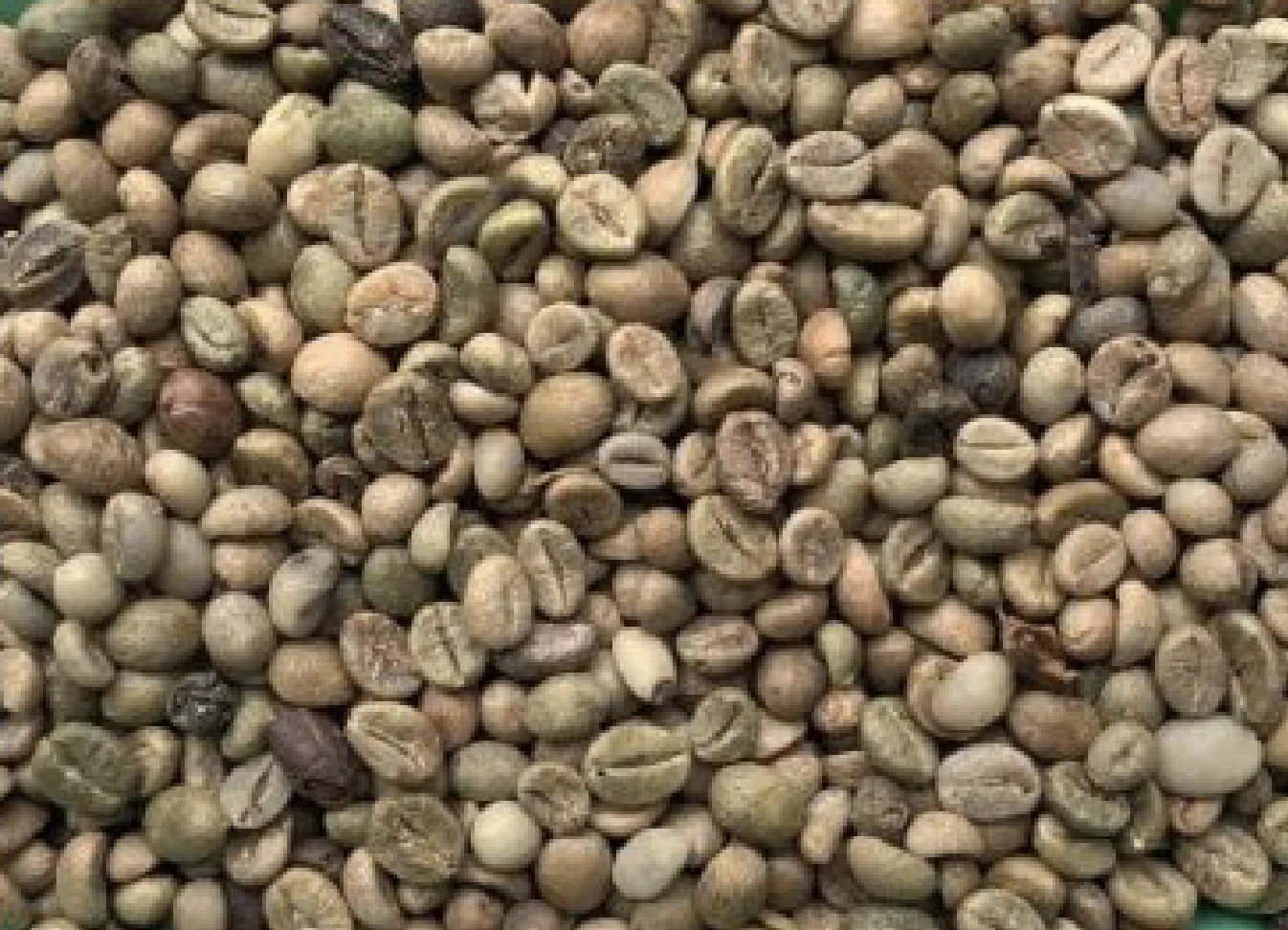
Importing Vietnamese coffee into India presents a fascinating B2B scenario. India is a massive producer of its own Robusta and Arabica. However, Indian multi-national companies frequently import massive volumes of cheaper Vietnamese Robusta Grade 2. They do this under special advanced authorization schemes to manufacture soluble (instant) coffee in Indian factories, which is then re-exported to markets like Russia and the Middle East. Navigating the strict Indian Customs tariffs and phytosanitary regulations is critical for this high-volume arbitrage trade.
The Manufacturing Arbitrage
India possesses immense, highly advanced soluble coffee manufacturing infrastructure. However, domestic Indian Robusta (from regions like Coorg) is often too expensive or utilized for premium domestic blends. To keep their instant coffee exports competitively priced on the global market, Indian manufacturers turn to theCentral Highlands of Vietnam. By importing massive flexitanks ofGrade 2 Robusta, they secure the high caffeine and extreme extraction yield necessary to run their spray-drying towers profitably.
Navigating the Tariff Wall
India heavily protects its domestic farmers with steep import tariffs on green coffee (often exceeding 100%). To bypass this, B2B importers utilize the "Advance Authorization Scheme." This allows Indian factories to importVietnamese Robustaduty-free, provided that 100% of the coffee is processed into instant coffee and subsequently re-exported out of India within a specific timeframe. This requires flawless supply chain management and perfectshipping documentationfrom the Vietnamese exporter to prove to Indian Customs that the exact volumes match.
The Ultimate B2B Masterclass: Global Green Coffee Logistics & Export Mechanisms
You’ve discovered the perfect green coffee in the highlands of Vietnam. The cup profile is flawless, the price is competitive, and the volume matches your roasting capacity. But in the ruthless world of international commodities, finding the coffee is only 20% of the battle. The remaining 80% is the brutally complex science of getting a 20-tonne steel box of sensitive organic matter across oceans, through hostile customs borders, and into your roasting facility without it molding, freezing, or being seized by port authorities. This is your definitive, human-to-human masterclass on the mechanics of global coffee export.
1. Demystifying Incoterms: Who Owns the Risk?
When you sign a contract to buy Vietnamese coffee, the most important three letters on that document are the Incoterm. This dictates exactly when the risk of the cargo transfers from the farmer in Buon Ma Thuot to you, the buyer.
- FOB (Free On Board) Cat Lai:This is the absolute gold standard for 90% of global coffee trade. The Vietnamese exporter is legally and financially responsible for milling the coffee, bagging it, trucking it to Ho Chi Minh City, clearing Vietnamese customs, and physically lifting the container over the rail of the ocean vessel. The exact second that container crosses the ship's rail, you own it. If the ship sinks five minutes later, it is your loss. This gives you, the buyer, total control over negotiating your own ocean freight rates.
- CIF (Cost, Insurance, and Freight):Here, the Vietnamese exporter pays the ocean freight and secures basic marine insurance to get the coffee to your destination port (e.g., Rotterdam or Los Angeles). While it sounds easier for a beginner, veteran buyers avoid CIF because you lose control over which shipping line is used, and the included insurance is often the bare minimum coverage.
2. The Holy Trinity of Shipping Documents
If you don't have the paperwork, you don't have the coffee. Customs officers don't care how good your espresso tastes; they only care about compliance. Your Vietnamese exporter must courier a physical package of original documents to your bank or office via DHL before the ship arrives.
- The Original Bill of Lading (OBL):This is the physical title deed to the coffee. Issued by the shipping line (like Maersk or MSC), the OBL proves that the coffee was loaded. You cannot claim the container at your destination port without surrendering the OBL. In modern trade, many buyers use a "Telex Release" (a digital surrender of the OBL) to avoid the risk of losing physical paper in the mail.
- Phytosanitary Certificate:Coffee is an agricultural product. Your country’s Department of Agriculture (whether the FDA in the USA or DAFF in Australia) wants to ensure you aren't importing foreign insects, soil, or plant diseases. The "Phyto" is issued by the Vietnamese government after inspecting the container, certifying it is free of pests.
- Certificate of Origin (C/O):This proves the coffee was actually grown in Vietnam. This is incredibly lucrative because Vietnam has Free Trade Agreements (FTAs) with the EU, UK, and ASEAN. A proper C/O allows you to import the coffee with zero or drastically reduced import tariffs.
3. Containerization: The Art of Fighting "Container Rain"
Imagine locking a wet sponge inside a steel box and baking it in the sun, then immediately throwing it into a freezer. That is exactly what happens to green coffee during ocean transit. The coffee holds 12.5% internal moisture. As the ship leaves the tropical heat of Vietnam and enters the freezing North Atlantic, the massive temperature drop causes the air inside the container to cool rapidly. Cold air holds less moisture than hot air, so the water condenses on the steel ceiling and "rains" back down onto the coffee. This causes catastrophic mold.
To combat this, professional buyers mandate strict container dressing:
- Kraft Paper Lining:The entire interior steel walls of the container are taped with thick, absorbent corrugated cardboard.
- Desiccant Poles:Massive strips of calcium chloride (like Absorgel) are hung from the ceiling hooks. These aggressively suck moisture out of the air before it can condense.
- GrainPro / Hermetic Bags:For specialty coffee or long transit times, the coffee is placed inside a massive, multi-layer plastic zip-lock bag inside the jute sack. This completely isolates the coffee from the ambient air, locking the moisture content in perfectly.
4. The Financial Engine: Letters of Credit (L/C)
How do you buy a $100,000 container of coffee from a supplier you've never met, on the other side of the planet, without getting scammed? You use a Letter of Credit (L/C). You do not wire cash to Vietnam. Instead, you give the money to your bank (e.g., Chase or HSBC). Your bank sends a secure message to the exporter's bank in Vietnam, stating: "We have the money. We will release the money to you *only* when you present the exact shipping documents proving the coffee has been loaded onto the ship." It is the ultimate trustless financial mechanism that protects both the buyer and the seller.
5. Surviving the EUDR (European Union Deforestation Regulation)
If you are importing into Europe, the game has fundamentally changed. The EUDR requires absolute proof that the coffee was not grown on land deforested after December 31, 2020. You cannot just buy generic "Vietnamese Robusta." You must provide European Customs with exact GPS polygon coordinates of the specific farm in Dak Lak where the coffee was grown. Advanced Vietnamese exporters have already digitized their supply chains via blockchain to provide this exact data point, making them the most valuable partners for European roasters.
6. Frequently Asked Questions (FAQ) on Global Import Logistics
Let’s answer the most burning, instant-search questions buyers have when attempting to move green coffee across the planet.
How long does it take to ship coffee from Vietnam to the USA?
Ocean transit time from Ho Chi Minh City (Cat Lai port) to the West Coast of the USA (Port of Los Angeles or Long Beach) typically takes between 22 to 28 days. Shipping to the East Coast (Newark or Miami) requires transiting the Panama Canal and takes approximately 35 to 45 days. You must also factor in 5 to 7 days for customs clearance upon arrival.
What happens if customs finds bugs in my green coffee container?
If agricultural inspectors (like DAFF in Australia or the FDA in the USA) find live insects, soil, or unauthorized organic matter in your container, a "Customs Hold" is placed. The container will be ordered into mandatory quarantine fumigation (usually using Methyl Bromide gas) at your expense, which can cost thousands of dollars. In severe cases, the container will be denied entry and destroyed. This is why pre-shipment fumigation in Vietnam is strictly required.
Why do buyers use Bulk Flexitanks instead of 60kg Jute Bags?
For massive commercial operations, particularly instant coffee manufacturers, hand-unloading 320 heavy jute bags is inefficient. A bulk flexitank is a massive plastic liner fitted inside a 20ft container. Up to 21.6 metric tonnes of loose green coffee is blown directly into it. When it arrives at the roastery, a vacuum tube sucks all 21 tonnes of coffee directly into the factory silo in under an hour, drastically reducing manual labor costs.
What is Marine Cargo Insurance Institute Cargo Clauses (A)?
When buying FOB, you must buy your own insurance. Institute Cargo Clauses (A), or ICC(A), is the highest level of "All Risks" marine insurance. It covers your coffee against total loss (the ship sinks), container fires, physical damage during crane loading, and water damage from waves. It is highly recommended over the cheaper ICC(C), which only covers catastrophic events and ignores partial damage like mold.
How do currency fluctuations affect FOB coffee prices?
Global coffee is traded universally in United States Dollars (USD). The underlying price is dictated by the London ICE Futures Europe exchange (which prices Robusta in USD per metric tonne). Therefore, if you are a buyer in Europe or Japan, you carry the foreign exchange (Forex) risk. If the Euro or Yen weakens against the USD between the time you sign the contract and the time you pay the Letter of Credit, your local cost for the coffee increases significantly.
7. The Science of Moisture Migration in Maritime Transit
Understanding the thermodynamics of a shipping container is what separates amateur importers from veteran commodity traders. Green coffee is hydroscopic—it breathes, absorbing and releasing moisture based on the ambient relative humidity (RH). When a container is sealed in Ho Chi Minh City, the air inside might be 35°C (95°F) with 85% RH. This air holds a massive volume of invisible water vapor. The dew point—the temperature at which this vapor turns into liquid water—is high. As the vessel traverses the globe, entering the cooler waters of the Mediterranean or the freezing North Atlantic, the temperature of the steel container walls plummets below this dew point.
Instantly, the vapor condenses on the ceiling. Because a standard 20ft container holds 19.2 tonnes of coffee, even a 1% shift in moisture equates to nearly 200 kilograms of water being released into the air. If this "container rain" drips back onto the jute bags, it creates a localized micro-environment of 100% humidity. Within 72 hours,Aspergillus nigerorPenicilliummolds will bloom. Not only does this destroy the cupping profile (creating musty, phenolic, or earthy defects), but it also risks the development of Ochratoxin A (OTA), a strictly regulated mycotoxin that will cause the immediate seizure and destruction of the entire shipment by European or Japanese customs authorities.
Advanced logistics mitigates this through triple-layer defense: 1) Drying the coffee to a strict maximum of 12.5% internal moisture using mechanical drum dryers rather than solely relying on patio drying, which can be inconsistent. 2) Utilizing Hermetic packaging (GrainPro or Ecotact) to eliminate the coffee's interaction with the ambient air entirely. 3) Aggressive desiccant deployment, requiring a minimum of 1.5kg to 2kg of highly active calcium chloride absorbents per container to forcefully lower the internal RH below the danger zone throughout the 45-day voyage.
8. Financial Engineering: Hedging on the ICE Futures Europe (London)
Global coffee is not priced by farmers; it is priced by algorithmic traders on commodity exchanges. The benchmark price for all Vietnamese Robusta is dictated by the Intercontinental Exchange (ICE) Futures Europe, based in London, trading under the ticker symbol "RC". The price fluctuates second-by-second based on global weather reports, hedge fund speculation, and macro-economic factors like the strength of the US Dollar (since all global coffee is traded in USD).
If you are a large B2B roaster buying 10 containers of coffee, a sudden price spike could destroy your annual profit margin. Therefore, professional buyers utilize financial hedging. When you sign an FOB contract with a Vietnamese exporter, the price is often agreed upon as a "differential" against the London terminal market (e.g., "London + $150 per metric tonne"). You, the buyer, then execute a "Long Hedge" on the futures market. By buying paper contracts equivalent to your physical coffee volume, you lock in your price. If the global price of coffee skyrockets before your shipment arrives, the physical coffee costs you more, but you make an equivalent profit on your paper contracts in London, perfectly neutralizing the risk.
This financial interplay is incredibly complex. It requires maintaining margin accounts with clearing brokers, understanding contango vs. backwardation in the futures curve, and expertly timing the "fixation" (the exact moment you lock the physical contract price to the terminal market price). Exporters in Buon Ma Thuot who understand this financial architecture are highly sought after by multinational conglomerates, as they offer flexible fixation terms and robust contractual integrity even during periods of massive market volatility.
9. Deep-Dive Quality Control: SCA vs CQI Protocols
Before a single bag of coffee leaves the port, its intrinsic value must be scientifically verified. The B2B coffee trade relies on two primary governing bodies for quality evaluation: the Specialty Coffee Association (SCA) for Arabica, and the Coffee Quality Institute (CQI) Fine Robusta standards.
The physical grading of green coffee is merciless. An independent Q-Grader (or R-Grader for Robusta) pulls a 350-gram sample from the lot. They meticulously search for Primary Defects (full black beans, severe insect damage, fungus) and Secondary Defects (partial sour beans, broken beans, slight insect damage). For a coffee to be certified as "Specialty Arabica" or "Fine Robusta," it must have zero primary defects. This requires the Vietnamese exporter to utilize highly advanced Optical Color Sorting machinery—massive industrial units utilizing high-speed cameras and pneumatic air jets to instantly blast imperfect beans out of the production line.
Following the physical grading is the sensorial evaluation (Cupping). The coffee is roasted to a highly specific, standardized light roast level (Agtron 58-63) within 24 hours of evaluation. The beans are ground, dosed exactly at 8.25 grams per 150ml of water at 200°F (93.3°C). The R-Grader evaluates the cup across ten attributes, including Fragrance/Aroma, Flavor, Aftertaste, Salt/Acid Ratio, Bitter/Sweet Ratio, Mouthfeel, Uniformity, and Balance. A score of 80 points or higher officially categorizes the coffee as "Fine Robusta," shifting it out of the commodity market and into the highly lucrative boutique pricing tier. This rigorous scientific methodology is the only way B2B buyers can confidently purchase containers of coffee unseen.
10. Environmental, Social, and Governance (ESG) in Modern Logistics
The modern B2B buyer is no longer just purchasing caffeine; they are purchasing a supply chain narrative. Multinational corporations and even mid-sized specialty roasters are under immense pressure from consumers and government regulators (like the EU Corporate Sustainability Due Diligence Directive) to prove their supply chains are ethical and environmentally sustainable. The old model of opaque, exploitative commodity trading is dead.
When sourcing from Vietnam, leading importers now demand robust ESG frameworks.Environmental:This means transitioning away from chemical fertilizers and adopting regenerative agriculture practices. It involves utilizing cascara (coffee cherry skins) for organic compost rather than dumping it into local waterways, and optimizing water usage during the Washed Process by implementing mechanical mucilage removers and closed-loop water filtration systems.Social:It requires absolute transparency regarding labor conditions, ensuring fair wages above the local living standard, and actively investing in the indigenous Ede and M'Nong farming communities of the Central Highlands, providing access to education and healthcare.Governance:This mandates strict anti-corruption policies, digital payroll systems, and fully auditable, blockchain-verified financial transactions between the exporter and the smallholder farmers.
Exporters in Buon Ma Thuot who provide comprehensive ESG reporting alongside their Bill of Lading command premium pricing, as they drastically reduce the reputational risk for the importing brand. They are not merely selling coffee; they are selling compliance and corporate peace of mind.
11. Let Us Handle the Logistics Architecture
We don't just sell coffee; we architect global supply chains. Our export division in Buon Ma Thuot consists of veteran logisticians, financial hedging experts, and certified R-Graders who have navigated every global port, every customs regulation, and every thermodynamic challenge the oceans can throw at us. Whether you need a highly specialized LCL (Less than Container Load) of Anaerobic fermented micro-lots to Sydney, or a massive 10-container bulk flexitank contract to the Port of Rotterdam utilizing ICE Futures hedging, we engineer the perfect, secure mechanism for your roasting empire.
Ready to Architect Your Global Coffee Supply?
Stop gambling with inexperienced middlemen and volatile spot markets. Partner directly with the source. Contact our B2B trade desk today to discuss current FOB pricing, request EUDR-compliant GPS tracing data, explore forward-contract hedging options, and secure your next shipment.