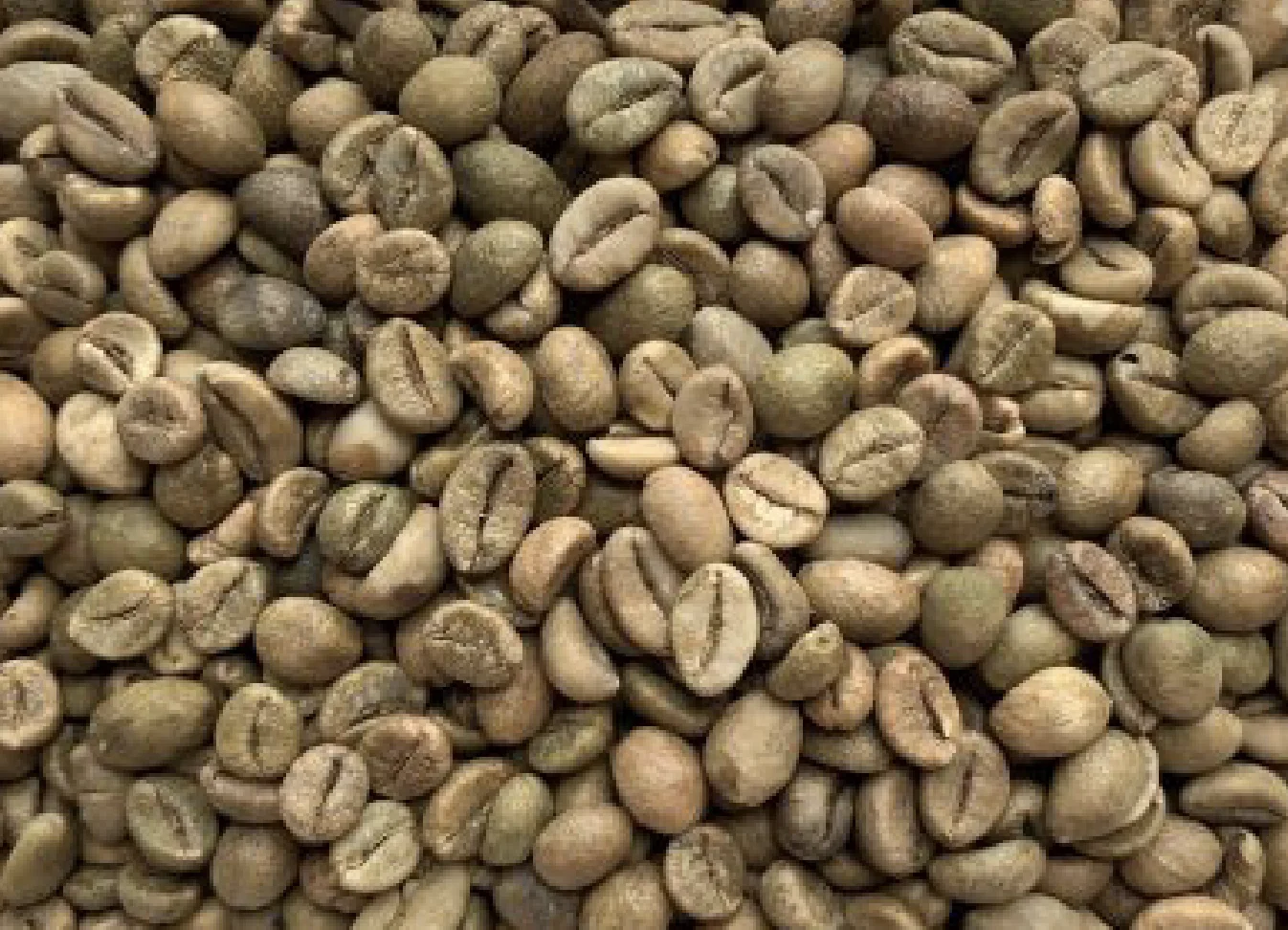
The Irony of Decaf Robusta
The defining characteristic ofVietnamese Robustais its massive caffeine content, which acts as a natural pesticide against insects. However, the global demand for decaffeinated coffee is surging, particularly in health-conscious markets like theUSAandGermany. Roasters require decaf beans that can still provide the heavy body, crema, and structural integrity of Robusta without the stimulating effects. This has given rise to a highly specialized sector: Decaffeinated Vietnamese Robusta.
The Swiss Water and EA Processes
Because green coffee buyers demand absolute chemical safety, the most popular decaffeination methods for premium Vietnamese lots are the Swiss Water Process and the Sugarcane (Ethyl Acetate/EA) Process. The EA process is particularly synergistic. Ethyl Acetate is a naturally occurring compound derived from fermented sugarcane. The green Robusta beans are steamed to open their pores, and the EA solvent binds specifically to the caffeine molecules, extracting 99.9% of the caffeine while leaving the complex carbohydrates and lipids—the compounds responsible for flavor and body—intact.
Maintaining the Crema and Body
DecaffeinatingGrade 1 Screen 18Robusta requires immense technical precision. The beans undergo significant structural changes during the decaffeination process, turning a distinct dark brown color even before roasting. However, when successfully processed, Decaf Vietnamese Robusta retains its profound ability to generate thick, persistent crema. It allows roasters to create rich, heavy-bodied decaf espresso blends with deep chocolate and toasted hazelnut notes, perfectly fulfilling the demands of the late-night European café culture.
The Master B2B Guide to Vietnamese Coffee Genetics and Agronomy
For international buyers, green coffee importers, and commercial roasters, understanding the genetic diversity of Vietnamese coffee is critical for long-term supply chain strategy. While the Global Coffee Capital of Buon Ma Thuot is synonymous with Robusta, the nation's agricultural portfolio extends far beyond a single species. Vietnam has meticulously developed an entire ecosystem of coffee varietals, each engineered or cultivated to fulfill specific commercial and specialty market demands globally.
1. The Dominance of Coffea Canephora (Robusta)
Robusta is the indisputable engine of the Vietnamese coffee industry, driving billions of dollars in export revenue. Native to sub-Saharan Africa, Robusta found its ultimate expression in the deepbasalt soilsof the Central Highlands. Compared to Arabica, Robusta (specifically the highly advanced TR4 and TR9 clones utilized in Dak Lak) possesses a thicker cellular structure, almost double the caffeine content, and significantly higher levels of chlorogenic acid (CGA). These biological traits make the tree virtually immune to coffee leaf rust and highly repellent to insect predation. For B2B buyers, this translates to unparalleled yield consistency and pricing stability, making Vietnamese Robusta the foundational ingredient for global instant coffee manufacturing andtraditional European espresso blends.
2. The Specialized Sub-Varietals: Culi (Peaberry)
Within both the Robusta and Arabica harvests, theCuli (Peaberry) mutationrepresents a highly lucrative, specialized commercial grade. Because a single, round seed absorbs all the cherry's nutrients, it develops an extreme density and an intensified flavor profile. In the roasting drum, the spherical shape allows for an incredibly even transfer of thermodynamic heat, preventing the edge-scorching that can affect flat beans during dark roasts. Roasters utilizing Culi beans can push development times further, extracting profound chocolate and malt notes without introducing ashy or burnt flavors.
3. The Arabica Highland Terroirs
Vietnam's strategic diversification includes a robust and growing Arabica sector, cultivated primarily in high-altitude microclimates. TheCau Dat region in Da Lat(Lam Dong province), sitting at 1,650 meters, is the epicenter of Vietnamese Arabica. Here, the Catimor varietal thrives. Catimor, a genetic cross between Timor Hybrid and Caturra, was selected for its high yield and rust resistance. However, under the intense diurnal temperature shifts of the Da Lat plateau, it develops a bright, malic acidity and deep caramel sweetness. Furthermore, historical heritage farms still maintain small plots ofMoka Bourbon, an ancient French colonial varietal prized for its exquisite floral aromatics and tea-like body, destined strictly for ultra-premium specialty markets.
4. The Niche Genetics: Excelsa and Elephant Beans
Beyond the mainstream markets, Vietnam cultivates highly unusual genetic variations serving niche blending requirements.Excelsa (Coffea liberica var. dewevrei)is a massive, drought-resistant tree producing tear-drop shaped beans with an intensely tart, jackfruit-like flavor profile. While unpalatable as a single origin, utilizing 5% Excelsa in a dark espresso blend adds an incredible layer of dark fruit complexity. Similarly, the cultivation of massive Elephant Beans (Maragogipe/Pacamara) in Vietnam provides roasters with a highly porous bean that, when roasted gently, yields a sweet, complex, and highly aromatic cup.
5. Processing Methodologies for Specific Varietals
The genetic potential of a bean is only realized through precise post-harvest processing. Vietnam has heavily invested in advanced milling infrastructure to elevate the cup profile of its harvests:
- Wet-Polishing for Robusta:The premier processing method forGrade 1 Robusta. High-friction machines strip away the silver skin, removing astringent compounds and delivering an exceptionally clean, heavy-bodied cup.
- Fully Washed for Arabica:Standard practice in Cau Dat. Cherries are depulped, and the mucilage is removed via controlled fermentation and washing, highlighting the bright, intrinsic acidity of the Catimor bean.
- Honey and Natural Processing:Increasingly utilized for Fine Robusta (CQI 80+). By allowing the bean to dry with the mucilage (Honey) or the entire fruit (Natural) intact, the beans absorb massive amounts of complex sugars, resulting in a wildly fruity, syrupy, and sweet flavor profile.
6. Defect Management and Export Grading
In B2B trade, genetic quality is irrelevant if the lot is contaminated withdefective beans. Vietnamese exporters utilize advanced optical color sorters to ensure strict adherence to international export standards. Black beans (which introduce rotting flavors) and broken beans (which burn quickly and introduce ashy flavors) are rigorously removed. Understanding these physical defect tolerances is mandatory for any importer negotiating anFOB Ho Chi Minhcontract.
7. Innovation: Decaffeination and Future Clones
The Vietnamese coffee sector is relentlessly innovating. Recognizing the global surge in decaf consumption, exporters are facilitating the production ofSwiss Water and Ethyl Acetate Decaffeinated Robusta. This allows roasters to harness the massive body and crema of Robusta without the extreme caffeine content. Simultaneously, agricultural institutes like WASI continue to map the coffee genome, developing the next generation of drought-resistant, ultra-high-yield clones to secure the global supply chain against the impacts of climate change.
8. The Crucial Role of the Soil Microbiome
Genetics alone do not guarantee a premium cup; the interaction between the plant's roots and the soil microbiome is paramount. Thebasalt soil of Buon Ma Thuotis not just a physical anchor; it is a living ecosystem teeming with beneficial mycorrhizal fungi and nitrogen-fixing bacteria. These microorganisms form a symbiotic relationship with the coffee roots, drastically increasing the tree's ability to absorb essential micronutrients like zinc and magnesium. This biological synergy is what ultimately translates into the complex organic acids and sugars found within the fully developed coffee bean.
9. Advanced Genetic Tracing for EUDR Compliance
With the implementation of the European Union Deforestation Regulation (EUDR), generic tracing is no longer sufficient. Importers must prove the exact geographic origin of their coffee. Vietnamese exporters are now combining GPS polygon mapping with genetic auditing. By matching the genetic markers of specificRobusta clonesto their registered farm plots, exporters can provide absolute, scientifically verifiable proof of origin. This level of genetic traceability ensures seamless customs clearance in strict markets likeGermanyand France.
10. The Economics of High-Density Planting
The genetic uniformity of clonal Robusta allows for highly optimized, high-density planting models. Unlike traditional seed-grown farms with irregular canopies, clonal farms inCư M\'garcan plant trees in mathematically precise grids. This maximizes photosynthetic efficiency, simplifies mechanized irrigation during the dry season, and dramatically reduces labor costs during harvest. The resulting economic efficiency is what allows Vietnamese exporters to offer highly competitive FOB prices on the global market while maintaining extreme volume and quality.
11. Frequently Asked Questions (FAQ) on Coffee Genetics
Why is Vietnamese Robusta genetically superior for Espresso blends?
Vietnamese Robusta (Coffea canephora) possesses roughly half the lipids and sugars of Arabica, but significantly more chlorogenic acid and caffeine. This specific genetic makeup provides immense structural integrity during high-pressure extraction (9 bars). It acts as a binding agent, stabilizing the emulsion of oils and water to create a thick, enduring "crema" that Arabica alone cannot achieve, while providing a deep, chocolate-driven base note.
What is the difference between Catimor Arabica and Moka Bourbon?
Catimor is a highly resilient, high-yield hybrid (Timor x Caturra) that dominates the Da Lat highlands, prized for its bright malic acidity and clean cup. Moka Bourbon is an ancient, low-yielding, and highly disease-susceptible French colonial heirloom varietal. Genuine Moka is incredibly rare and expensive, offering a highly complex, tea-like body with profound floral and jasmine aromatics.
Can Culi (Peaberry) beans be roasted together with flat beans?
It is highly advised against roasting Culi (Peaberry) beans together with standard flat beans. Because Culi beans are perfectly round and significantly denser, they absorb heat at a completely different rate. If roasted together, the flat beans may reach the first crack and begin to scorch before the core of the dense Culi bean is fully developed. They must be roasted in separate batches and blended post-roast.
How are TR4 and TR9 Robusta clones different from seed-grown coffee?
Robusta is a cross-pollinating species, meaning trees grown from seed will exhibit immense genetic variability (different bean sizes, varying resistance to disease, different ripening times). TR4 and TR9 are advanced clones developed by Vietnamese agronomy institutes. Cultivating via grafting these clones ensures absolute genetic uniformity across the entire plantation, guaranteeing a synchronized harvest, massive yields (up to 5 tonnes/ha), and a consistent bean size that easily meets the Grade 1 Screen 18 export standard.
What is Ethyl Acetate (EA) Decaffeinated Robusta?
The EA (Sugarcane) process is a natural decaffeination method. Green Robusta beans are steamed to open their pores, and Ethyl Acetate—a naturally occurring solvent derived from fermented sugarcane—is circulated through the beans. The EA molecule bonds specifically with caffeine, extracting it while leaving the complex flavor compounds and carbohydrates intact. This allows roasters to offer a heavy-bodied, decaffeinated Robusta espresso.
12. Partner with the Source of Vietnamese Coffee
Securing a stable, high-quality supply of green coffee requires partnering directly with the experts in Buon Ma Thuot. Whether you are formulating a new RTD beverage requiring massive volumes of Grade 2 Robusta, or a boutique roaster seeking the rare Culi Arabica Peaberry, our export infrastructure is designed to execute your contracts flawlessly.
Elevate Your Coffee Roasting Portfolio
Harness the genetic power of Vietnamese coffee. Contact our B2B export division to discuss blend architecture, request green coffee samples, or secure your forward contracts for the upcoming harvest season.